Key takeaways
- Wood is natural and flexible but needs regular care.
- Composite and PVC resist rot and stains and need little upkeep.
- Color, heat and texture vary by line, so see samples outdoors.
- The right fit depends on the look you love and the care you will give.
What wood offers
Wood has a natural look and feel that many people love. Pressure-treated pine is widely available and easy to work with, cedar adds color and a softer feel and hardwoods such as ipe are extremely durable. Wood can be stained or painted in nearly any color.
The trade-off is upkeep. Wood needs cleaning and sealing every year or two, and boards can crack, cup or splinter over time.
What composite and PVC offer
Composite blends wood fiber and plastic, and PVC is fully synthetic. Both resist rot and insects, do not need staining and clean with soap and water. Many have a textured surface that looks like wood.
They start higher, and darker colors can feel warm in direct sun. Spacing and fastening must follow the manufacturer's instructions.
Compare the care
A wood deck might need an afternoon of cleaning and sealing every year or two. A composite deck might need an occasional wash. If you enjoy the care routine and the look of real wood, wood is a fine choice. If you would rather spend weekends on the deck, composite or PVC may suit you better.
Make the choice
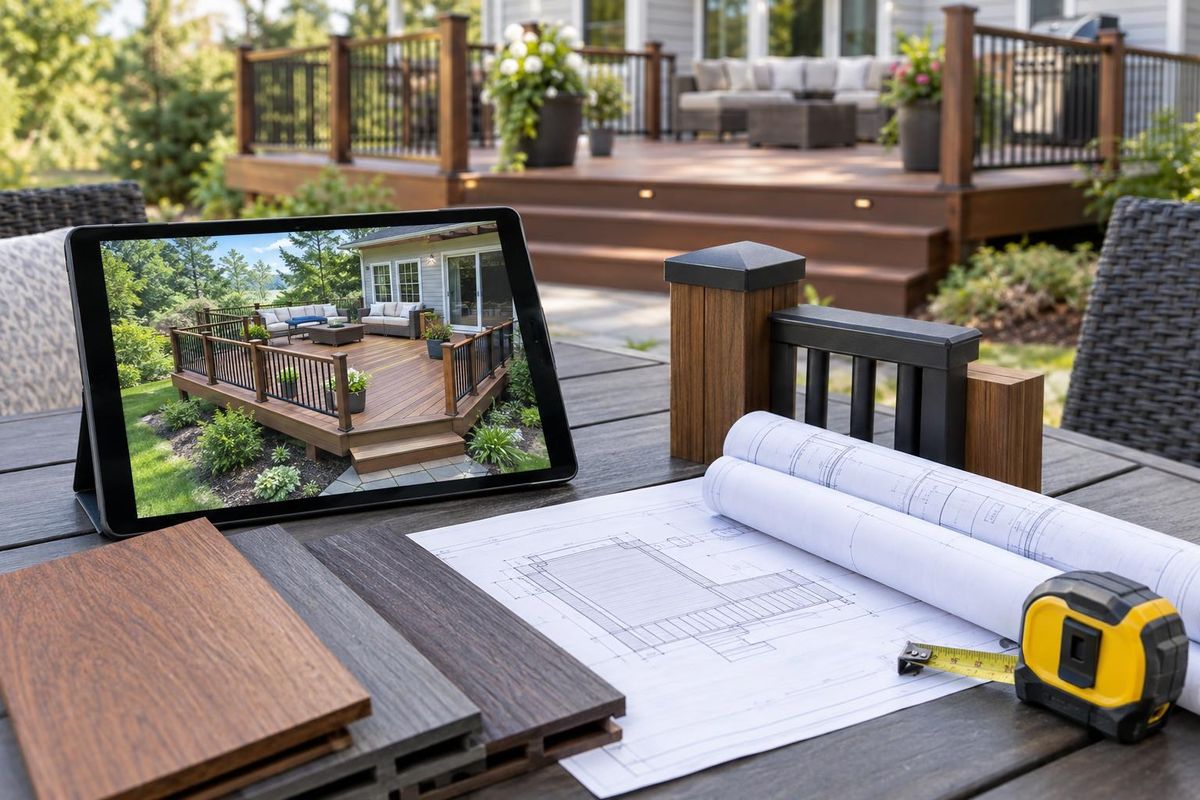
See samples outdoors in your own light and feel them barefoot. Ask what the manufacturer requires for installation. Then choose the material that fits your style, your site and your routine.
Quick answers
Which lasts longer?
Quality composite and PVC resist rot and insects very well, and hardwoods are also durable. Any deck lasts longer with good construction and care.
Does composite scratch?
Some lines can scratch or scuff. Many have a protective cap that resists wear.
Can I mix materials?
Yes. Many decks use composite boards with wood or metal railings.