Key takeaways
- Footings carry the load to the ground and should reach below the frost line.
- The ledger attaches the deck to the house and must be flashed and fastened correctly.
- Joist size and spacing depend on span and decking.
- Rated connectors matter as much as the lumber.
Footings and posts
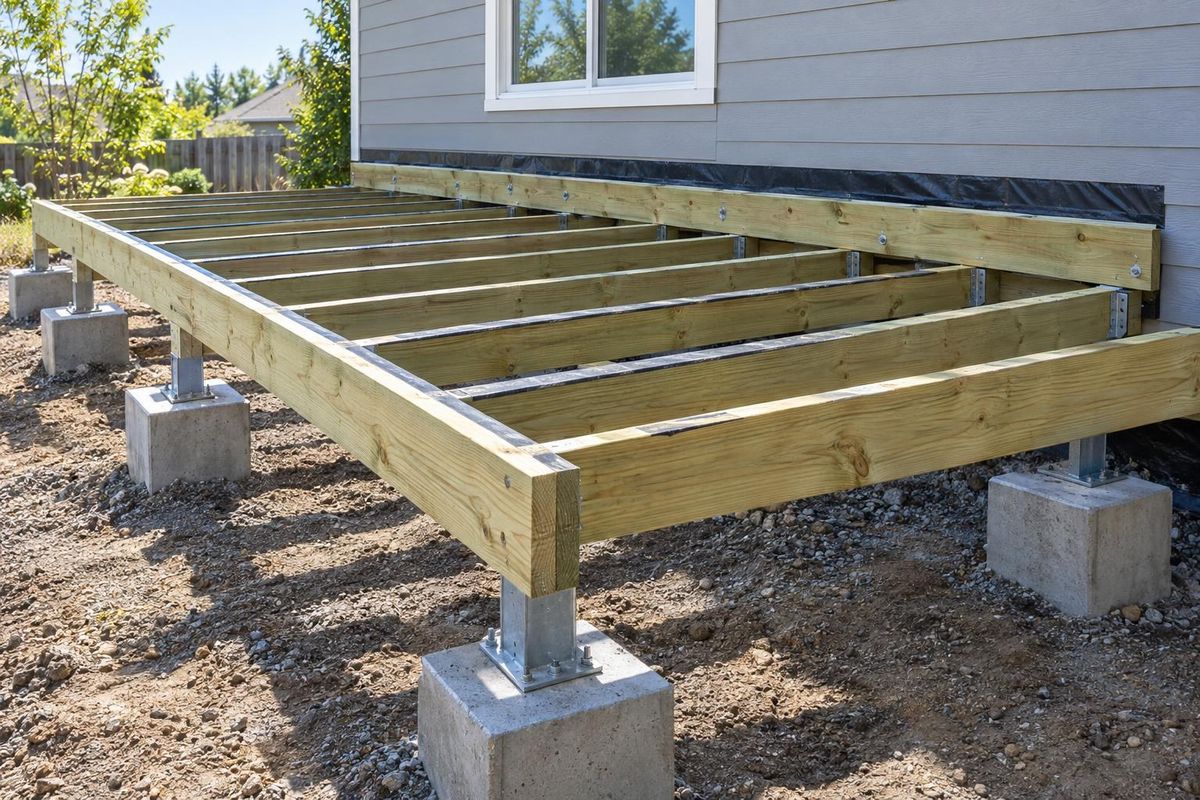
Footings spread the load into the soil. They should extend below the local frost depth so freezing ground does not heave them, and they should rest on firm soil. Posts rise from footings through metal bases that keep wood off the concrete.
Footing size depends on the load and soil, and a hot tub or roof needs more.
Beams and joists
Beams carry the joists, and joists carry the deck boards. Sizes depend on span, spacing and loads. Joists are commonly spaced sixteen inches on center, and closer spacing may be needed for some decking.
Joist hangers, post caps and other connectors should be rated for outdoor use.
The ledger
The ledger ties the deck to the house. It must be fastened to the house framing with proper bolts or screws, not just nails, and it needs flashing so water does not run behind it. Ledger failure is one of the most serious deck problems.
Some decks avoid the ledger by standing on their own posts.
Inspect and maintain
Look at the structure once a year. Check for rot at post bases and joist ends, rust on hardware, loose bolts and signs of water at the ledger. Catching problems early prevents bigger ones.
Quick answers
How deep should footings go?
Below the local frost depth and onto firm soil, following local requirements.
Can a ledger be added to an existing house?
Yes, with proper fastening and flashing. Some siding and framing need special steps.
What are signs of structural trouble?
Bounce, sag, rot at joist ends, rusty connectors and gaps at the house are warning signs.